

Hospitality is one of the oldest industries existing in the world: hotels and restaurants were there since ancient times to feed the travellers and offer them a warm bed. Time changes and as every industry evolves and change, so does the hospitality. Restaurants are no longer there just to feed the guests; and hotels are so much more than just offering a warm bed. Today, among numerous choices of hotels and restaurants, fitting to each budget and taste, you can find high tech properties; offering latest technological innovations in the hotels, Michelin stars restaurants with the food as gourmet experience and so much more. As the industry advances and changes so quickly, marketing, serving to present these changes to the audience, evolves as well. Marketing in the hotels and restaurants went a long way from carvings on the stone in ancient times to Social Media and Google Ads today.
In Ancient Times, small inns that were offering accommodation and meal to the travellers, existed in Roman, Greek and Persian empires. Egyptians were the first civilization to start the advertisement by drawing news, announcements on the papyrus and carving them on stones. Roman Empire was advertising Gladiator Games by painting the moment of fight on the city walls to attract the spectacles. In Persian empire, first inns started to appear along the Great Silk Road due to high demand, as it was the busiest trade road in the Far East, with thousands of travellers passing by every day.


18-th and 19-th century is the period of first newspaper advertisements and first ever billboards. Prestigious hotels such as “Metropol” would book a place to be featured in a leading newspaper of that time like “The New York Times”.

End of 19-th century is the time when first hotel brands started to emerge. Hospitality acquired important knowledge from other industries: “Successful branding is a guarantee of the quality and your best marketing tool.” The idea behind it was that whenever you would visit the hotel united by one brand name, you will experience the same quality of hospitality. Thus, brightest hoteliers of that time, created the long lasting luxury hotel brands such as “The Ritz”, established by famous Cesar Ritz and “Kempinski”, founded by Berthold Kempinski. Both of these oldest brands exists till today, expanding their portfolio all over the world. And their names are still synonyms of the luxury hospitality.
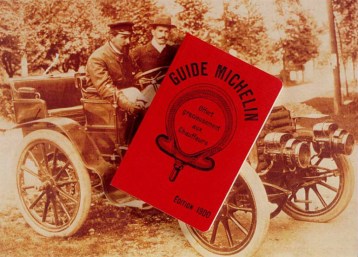
Boom in newspaper advertisement led to the creation of famous Michelin guide (world known red book, listing the restaurants in the certain area for its exceptional quality). It’s a dream and big honour for many restaurants in the world to be included in Michelin list and get the star rating. Back then, when it was created in 1900s, the guide supposed to boost the usage of cars and therefore tires purchases which Michelin produced. The guide listed inns and restaurants, tire shops for Paris and later for the whole France. Later, Michelin started to use famous star ratings and narrowed to restaurants only, expanding the countries it’s issued for. Today, Michelin issues guides for more than 25 countries all over the world, granting more than 2,700 restaurants with the stars for the exceptional gourmet experience.
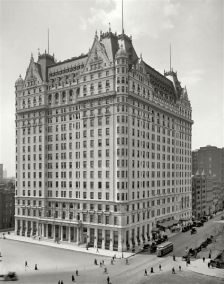 “The Plaza” Hotel in New York, 1907
20 century is the time, when major hospitality players started to appear on the world stage: first Marriott, Hilton and later Fairmont, Accor, Four Seasons. Due to high competition among the brands, marketing took the reign in the strategy to position themselves and win the guests over other competitor brands, As of 1920s traditional marketing as we know it takes its first forms: first with radio and later with TV advertisements.
End of 20th century dates the creation of internet and first ever reservation systems, internet based hotel booking websites. Within short period of time, such websites as travelweb.com in 1994, and later Expedia, booking.com quickly gained popularity. Most of the hotels started to be featured on them, allowing visitors to do direct bookings themselves on the websites.
Hotels started to create their websites (being Hyatt Hotels first in 1994) – a digital presence of the brand, allowing visitors to view the hotel photos, get acquainted with facilities and services, contact online with the hotel directly.
21 century is a new era of marketing. Hotels and restaurants all over the world and of all budgets consider marketing as one of the main tools to win the hearts and wallets of the guests. The development in technology shifted the traditional perception of marketing. It’s now numerous digital opportunities such as mobile marketing, social media, SEO, Google Ads, websites, e-mail marketing and many more. Mostly all of hospitality businesses represented online in many booking channels, social media networks, have their websites, mobile applications, sending E-mail newsletters and advertise on Google daily.
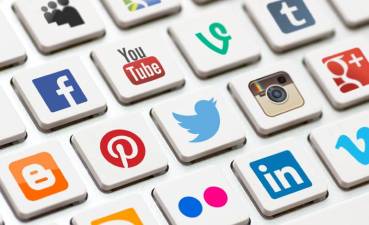
Hospitality marketing went a long way to the point that, to attract customers nowadays, you don’t need to go from town to town to promote your business; instead you can connect online with hundreds thousands people from all over the world, communicating all you want with them, attracting them to your property. Booking in the hotel can be done within few clicks from anywhere across the globe.
When you look back, you realize what an incredible opportunity we have today with the power of marketing, and it’s just the beginning: the trends are changing, new innovations appear on the market, pushing the hospitality marketing to the next level.
 Farah Sinjeri